
Get to know Nicole Fisher
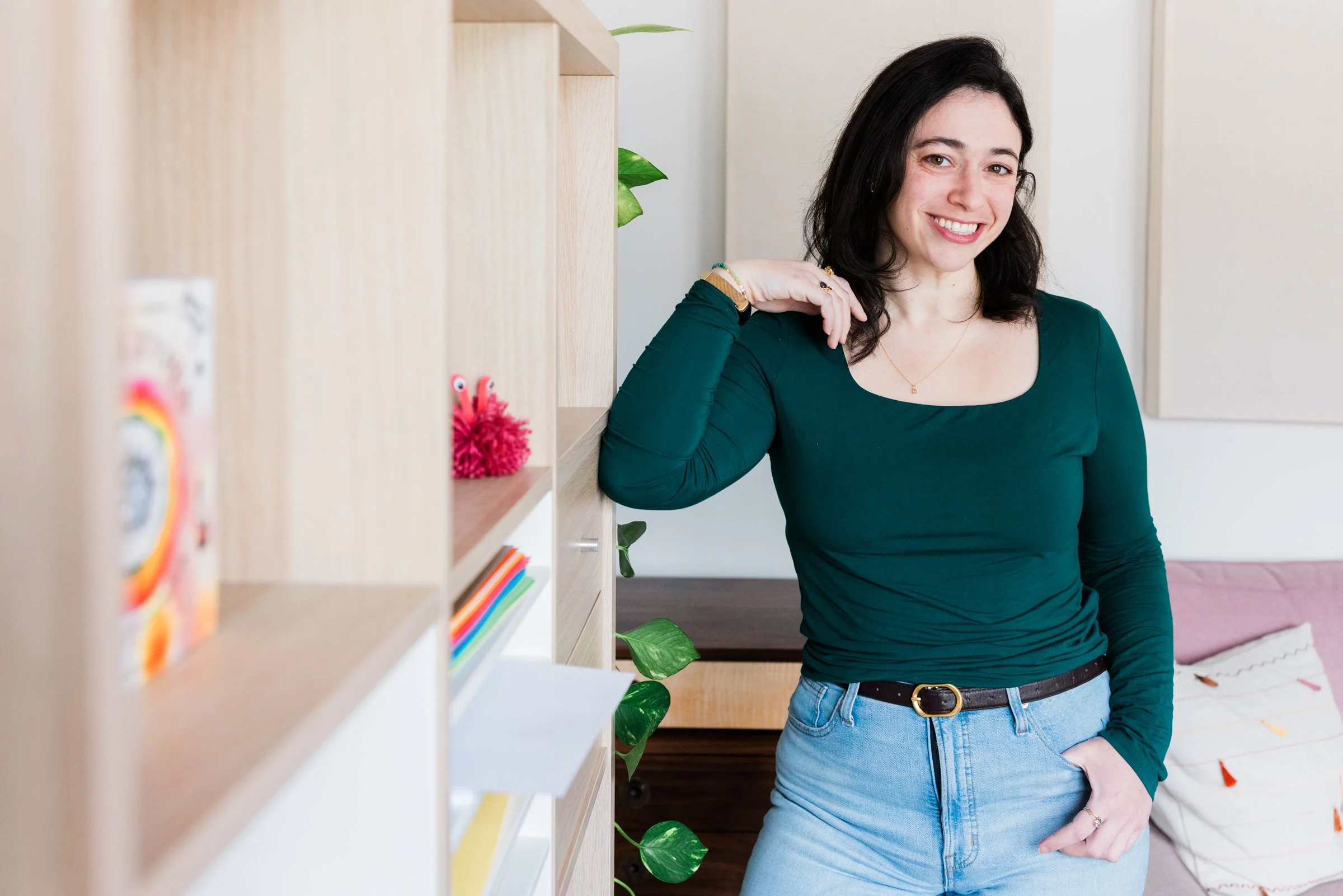
Learn more about Nicole’s journey to becoming a therapist, ways she shows up for clients, and how she gets herself to do the dishes!
We are so glad that you are a part of the Kaleidoscope Team. What made you want to be a therapist?
I am so excited to be a part of the Kaleidoscope team, working with other neurodivergent individuals who see the benefits of lived experience, creative therapies, and work from a supportive, affirming, and inclusive space.
My decision to become a therapist is closely connected to my own mental health journey, including delayed diagnoses, learning differences, ADHD, and eating disorders.Through my own experience I have recognized the benefit of a more holistic approach that integrates creativity, nervous system awareness, and healing through a variety of approaches and modalities. Art has always been a core part of who I am. It’s been a way for me to feel grounded, process emotions, make meaning, and find steadiness during different seasons of my life. Through the professional and personal twists and turns of life I came to recognize that I wanted to focus my life on supporting others through their challenges and celebrating their joys, providing safety, healing, and solace as a therapist and counselor.
What kinds of clients do you really enjoy supporting?
I’m especially drawn to supporting people who feel deeply, think creatively, and often move through the world a little differently. Their intention for coming to therapy might be to work on feeling more at home in themselves, building tools that work for their unique nervous systems, and developing a kinder, more compassionate relationship with their mind, body, and identity. For teens and younger clients, this can look like learning to express themselves safely, exploring who they are, and feeling supported during times of growth and change. Many of the people I work with are navigating anxiety, ADHD, disordered eating, or the impact of delayed diagnoses, and may carry a long history of feeling misunderstood, “too much,” or like they are constantly feeling they have to work harder just to keep up or try to look like they’ve got it all together.
Often, the people I work with are thoughtful and perceptive, but also exhausted. Many are struggling with the weight of self-doubt, overwhelm, or a sense of having to mask parts of themselves to be accepted. At the same time, there might be a strong desire to better understand their brains and bodies, feel more regulated, and move through the world with greater self-trust and ease
Can you tell us a little bit about how you operate when you are in a therapy session?
I am a person-centered therapist and adapt based on who I am working with and their evolving needs in each session. I try to incorporate somatic exercises into each session to provide grounding and often collaboratively create rituals with whoever I am working with to provide a sense of structure and consistency, while also making room for variety, interest, novelty, and whatever is present in that moment. Art-making and creative expression are often incorporated into therapy work in ways that relate to the person I am working with and are tailored to their needs and interests. I operate from a place of curiosity, compassion, and connection as I try to understand, support, and build meaningful relationships with my clients.
Do you have a favorite art material or directive that you like using?
It’s hard to pick a favorite because so many materials or experientals fit different needs and purposes. Two approaches I really enjoy are altered books, which give the opportunity to safely destroy and create, experiment, and have a longer-term project that allows people to connect to a narrative approach and choose the story they tell to and about themselves and their experiences. On the other end of the spectrum, I appreciate and utilize bilateral drawing a lot for something that is really accessible, can be quick, and supports self-regulation, grounding the nervous system, activating the whole brain, engaging in a kinesthetic experience focused on the process, and letting go of perfectionism, control, and self-judgment.
What is your preferred way of expressing yourself (art, music, a certain material etc)?
Creating is a part of who I am and how I express myself. From what I wear to what I listen to, and the food I cook are all a part of my expression and creativity. Art making, from painting to photography, sewing, and journaling, are some of the ways I most enjoy expressing and understanding myself.
Music or no music when you are trying to concentrate?
Both! It depends on what I am concentrating on, where my head is at, and what type of music I’m listening to.
What is your least favorite care task or chore? And how do you get yourself to do it?
Washing dishes / cleaning up after cooking is probably my least favorite regular care task. I usually get myself to do it by listening to music and dancing while I wash and dry and such, or listening to an audiobook and not focusing on the sensory experiences as much because my mind is occupied while my body is doing what it needs to do.
If you are interested in working with Nicole, please reach out!